Editorial guide
In brief
The first technical SEO priority is making important pages accessible and eligible for indexing. Next steps can be selected by considering the value of affected pages, the scope of the issue and the effort required to resolve it.
In this article
- Start by checking accessibility
- Compare the expected URL with the selected URL
- Set priorities with three questions
- Record the result of the fix
- Sources
Start by checking accessibility
An audit tool can produce a long list of warnings. They do not all have the same impact. The first question is whether a visitor and a search engine can reach the main content. An access issue blocking a core service page should not be treated as equivalent to a missing description on a low-priority archive page.
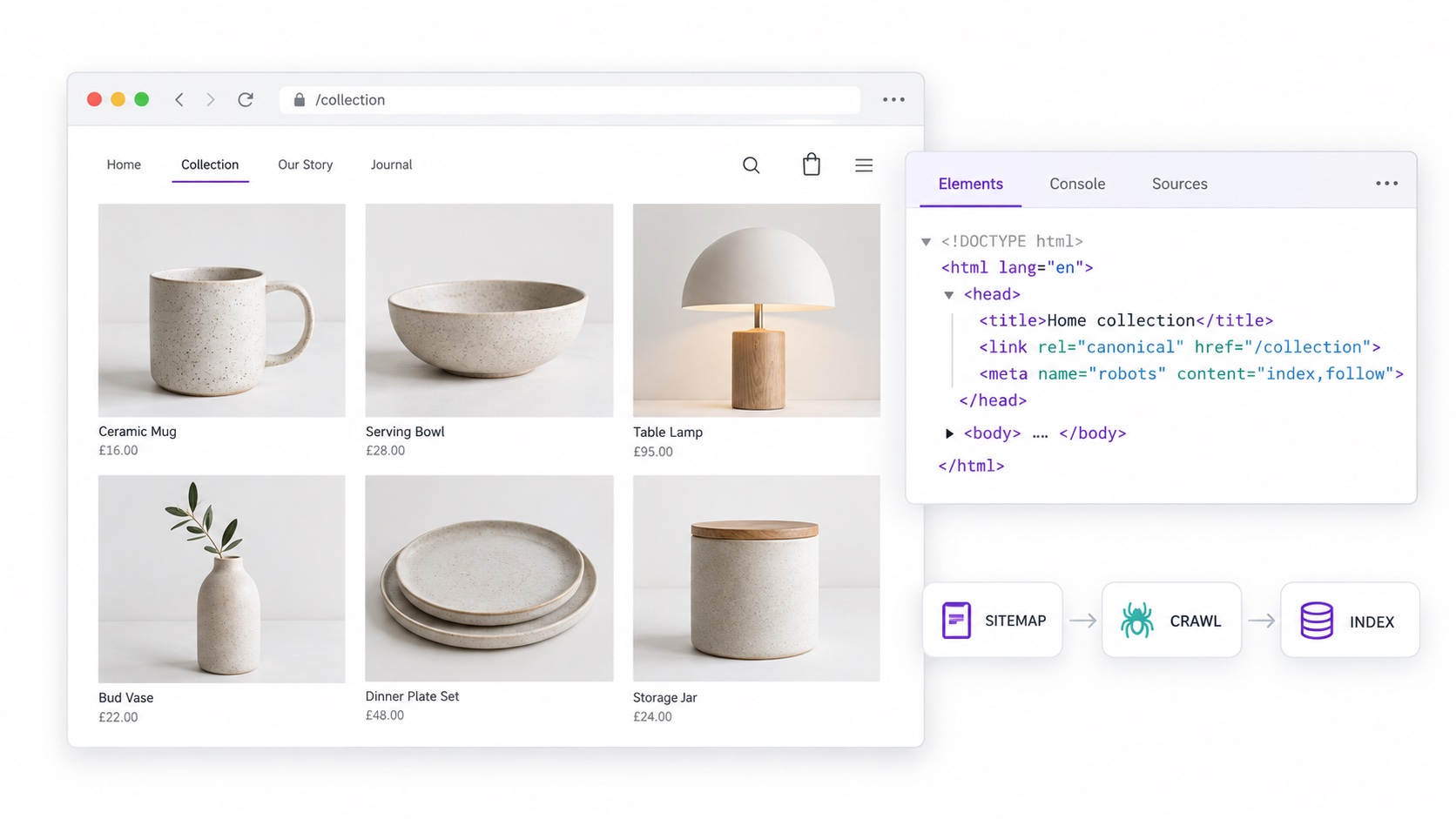
Google’s minimum technical conditions cover three points: Googlebot must not be blocked, the page must return a successful HTTP 200 response, and it must have indexable content. These conditions establish eligibility; they do not guarantee indexing. Technical requirements
A small sample can provide a useful starting point: the home page, an important service page, a recent article and a category page. This helps with an initial diagnosis but does not replace a detailed audit.
Compare the expected URL with the selected URL
When content can be accessed through different addresses, the preferred representative URL should be clear. Google selects a canonical page from similar pages. Your declared preference is a signal, and Google may select a different address. Canonical selection
Redirects, canonical tags and sitemaps are methods that can communicate this preference. They should provide consistent signals. Canonical methods
For example, imagine a service page with both a standard URL and a campaign-parameter URL. Keep the expected main address, the declared canonical and the observed selection in separate columns. This makes it easier to distinguish assumptions from findings.
Set priorities with three questions
The following is a suggested working method for this guide. It is not a scoring system used by search engines.
- Impact: Which business objective or user journey is affected?
- Scope: Does the issue affect one page, a critical template or the whole site?
- Implementation: Which team, dependencies and amount of time are needed?
An incorrect indexing instruction affecting every product page should generally be investigated before missing descriptions on a few articles. A seemingly small fix can also deserve high priority if it restores access to an essential contact page. The number of pages alone should not determine the decision.
Record the result of the fix
Finishing development is not the final check. Review the live page’s response, visible content and relevant technical signal again. Record the result alongside the observation date and method.
A simple record can include the issue, affected URL group, expected behaviour, responsible person, implementation date and verification result. Changes in crawling or indexing data may take time, so assess the technical fix and its appearance in search results separately.
A useful technical task list makes its order understandable. When teams can choose the next action from the same evidence, an audit becomes a plan they can act on.
Sources
- Google Search Central — Technical requirements
- Google Search Central — Canonicalization
- Google Search Central — Canonical methods
Sources checked on 24 September 2026. This is an editorial guide based on official documentation.