Editorial guide
In brief
GEO focuses on making content discoverable and understandable in answers delivered through generative AI. A sound technical foundation and clear, well-sourced content are useful starting points.
In this article
- How is the search journey changing?
- Why does the SEO foundation still matter?
- Are search access and model training the same?
- What could an initial work plan look like?
- Sources
How is the search journey changing?
A search can start with a short keyword or a detailed question with several conditions. The result might be a list of links, a summary or a comparison. Looking only at a ranking for one query may therefore provide an incomplete framework for evaluating visibility.
In this guide, GEO is used as a collective term for work that helps content be found and understood in discovery experiences using generative AI. Access requirements, source selection and reporting differ between platforms. A useful starting point is to specify the platform and outcome being measured, rather than assume there is a universal “GEO score.”
Why does the SEO foundation still matter?
Google states that existing SEO practices remain relevant to AI Overviews and AI Mode. It does not require a special AI file or a special schema. To be eligible as a supporting link, a page must be indexed and eligible to appear in Search with a snippet. Meeting these conditions does not guarantee visibility. Google’s guidance
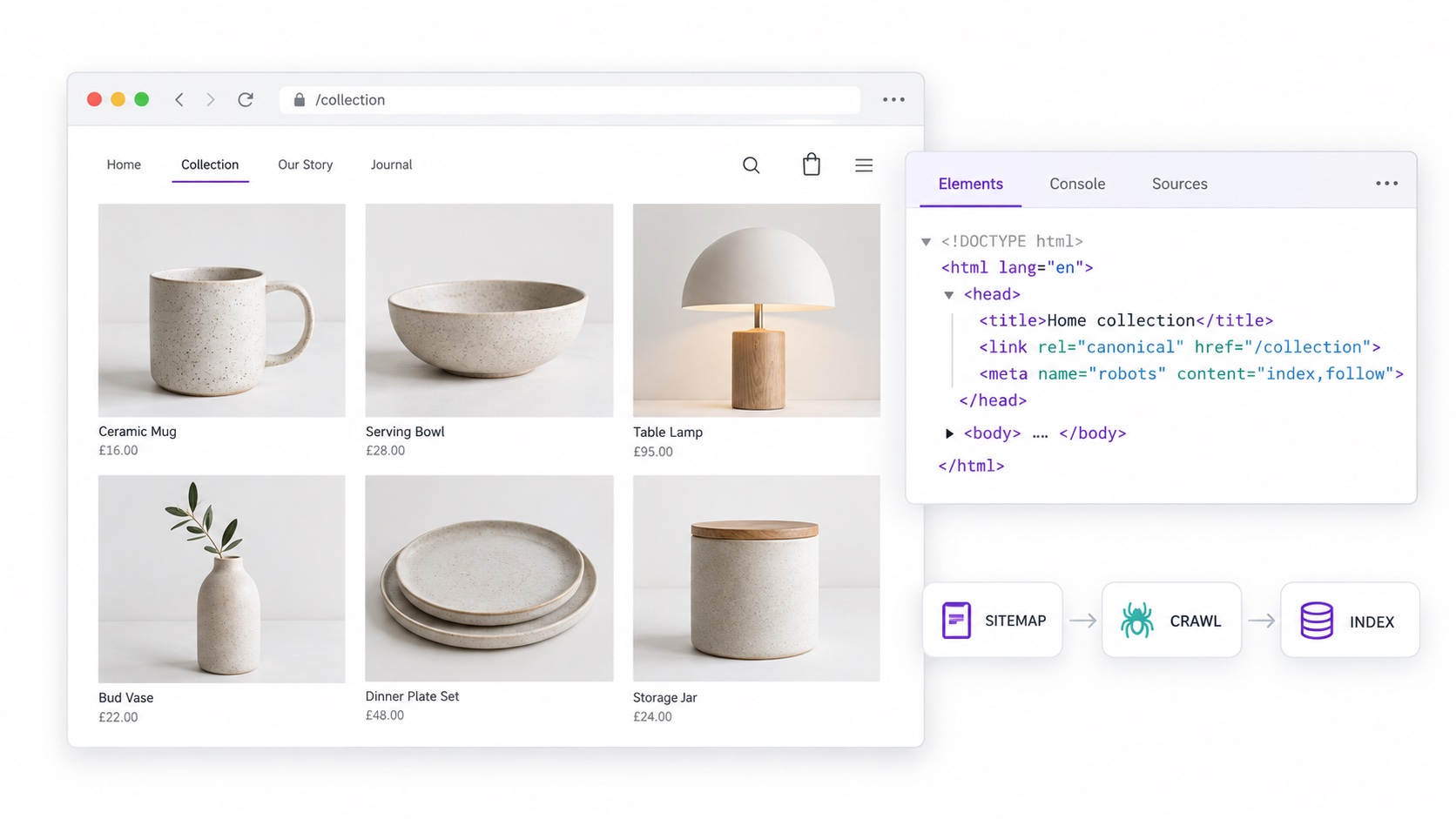
A practical sequence is to check accessibility first, identify the question the content answers, and then review its relationship with similar pages. A technical service page, for example, could explain the definition, scope, working process and limitations under separate headings. This also makes it easier for readers to find what they need.
Are search access and model training the same?
It is important to assess each platform’s crawlers separately. OpenAI describes OAI-SearchBot as a search crawler and GPTBot as a crawler for content that may be used in model training. These preferences can be managed independently. ChatGPT-User is associated with visits initiated by users. OpenAI crawler documentation
This distinction makes it possible to prepare an access policy around a business objective instead of making a vague decision to “allow all AI bots.” A review should also consider actual access conditions, including login requirements and security infrastructure, alongside robots.txt.
What could an initial work plan look like?
- Collect real questions. Write down five questions your audience genuinely asks.
- Map the answers. Record the page and section that answers each question.
- Make evidence visible. Put dates, scope and primary sources close to the relevant claim.
- Record observations. Note the platform, date, query and links shown together.
- Review business outcomes. Consider qualified visits and enquiries alongside visibility.
This is a suggested prioritisation framework. Being cited in one answer does not establish lasting success. Comparable observations and clear objectives provide a more useful basis for decisions.
Sources
Sources checked on 24 September 2026. This is an editorial guide based on official documentation.